London homes and streets before they’re listed
Last updated: 7 October 2026
London is far too big to search as one place. HomePinr helps you get specific: pin the individual London homes and streets you’d genuinely like to live in, even when nothing there is for sale, and let homeowners who claim their property see that interest.
What “pre-market” means on HomePinr
On HomePinr, pre-market refers to homes that are not currently listed for sale on the open market. Buyers can register interest in those homes or streets, but a pin does not mean the property is available or that the homeowner intends to sell.
Greater London, boroughs and postcodes
When people say “London”, they can mean three quite different things, and it helps to keep them apart.
Greater London
Greater London is the whole area covered by the Mayor of London and the London Assembly. It is made up of the 32 London boroughs plus the City of London.
Boroughs
Each borough is its own council, responsible for local services and planning decisions such as conservation areas. Neighbourhood names like Angel, Canonbury or Bow sit within boroughs, but their edges are usually informal — Angel and Canonbury are in Islington, while Bow is in Tower Hamlets.
Postcode districts
Districts such as N1 or E3 are Royal Mail delivery areas. They don’t map neatly onto borough boundaries: one postcode district can cross into more than one borough, and some London-style postcodes reach beyond Greater London altogether.
On HomePinr you pin individual homes and streets rather than whole boroughs or postcodes, so the exact address is what counts.
Some contrasting London areas
These are examples to show how varied London is and how you might search it. They are not recommendations, and they don’t mean anyone has pinned or claimed homes there.
Islington: Angel and Canonbury
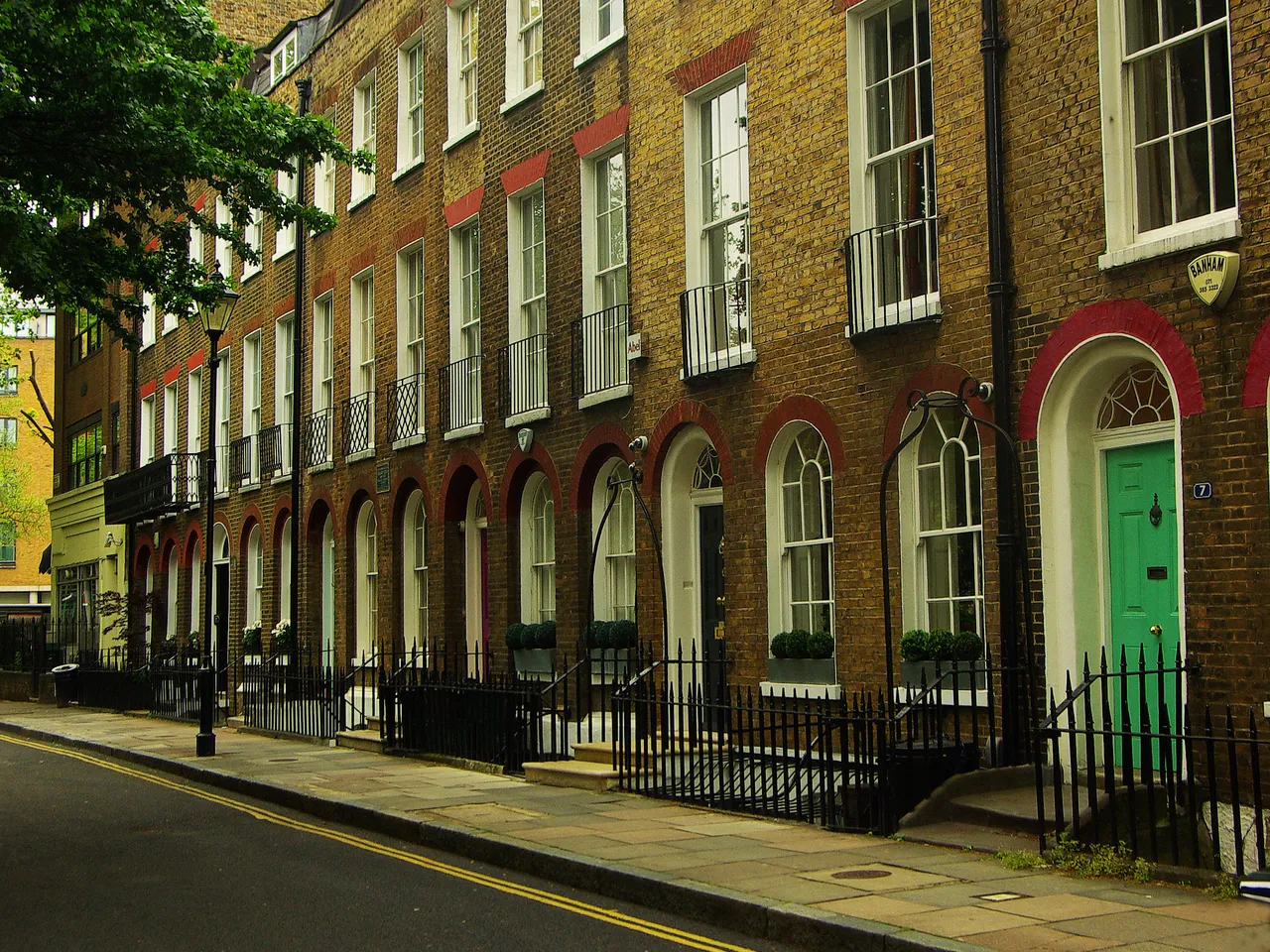
Duncan Terrace and Colebrooke Row, close to Angel, form one of Islington’s conservation areas. Islington Council describes it as largely late Georgian and early Victorian terraces, with the Regent’s Canal emerging from the Islington Tunnel nearby and a section of the New River Walk running through.
A little further north, the Canonbury conservation area grew from the Elizabethan manor of Canonbury, centred on Canonbury House and its tower. The council calls Canonbury Square one of the earliest and finest squares in Islington, and notes the mid-Victorian villas with large gardens found on many surrounding streets.
Around Victoria Park
Victoria Park opened in 1845 and is described by Tower Hamlets Council, which manages it, as London’s oldest public park. The park itself is in Tower Hamlets, with Bow to the south, while the London Borough of Hackney runs along its northern boundary. It’s a clear example of why the borough and postcode of each nearby street are worth checking individually.
Dulwich
Dulwich, in the London Borough of Southwark, is home to Dulwich Picture Gallery, which Southwark Council describes as the world’s first purpose-built public art gallery, and to Dulwich Park, a 29-hectare park on College Road. Southwark lists West Dulwich and North Dulwich as the nearest rail stations for the park.
Greenwich
Maritime Greenwich was inscribed as a UNESCO World Heritage Site in 1997. UNESCO describes the ensemble as including the Queen’s House by Inigo Jones, the former Royal Naval College by Christopher Wren, and the park containing the Old Royal Observatory.
Ealing
In Ealing, Walpole Park surrounds Pitzhanger Manor, the Grade I listed house that Sir John Soane designed for himself. Ealing Council bought the manor and its grounds in 1900, and the park opened to the public in 1901; the manor reopened in 2019 after a major restoration.
Walthamstow
Walthamstow, in the London Borough of Waltham Forest, has the William Morris Gallery in Lloyd Park — the Grade II* listed Georgian house that was Morris’s family home. To the west, Walthamstow Wetlands opened to the public in October 2017 as a 211-hectare reserve around working reservoirs.
Narrowing your search to particular streets
- Start from your routine. Work, school, family or a regular journey usually narrows London down faster than any map.
- Pin the actual street. Duncan Terrace in Islington, shown above, is the kind of specific place a pin works best for.
- Check the name and postcode. Many London street names appear in more than one borough, so make sure the street you pin is the one you mean.
- Keep your pins current, removing places you’d no longer consider.
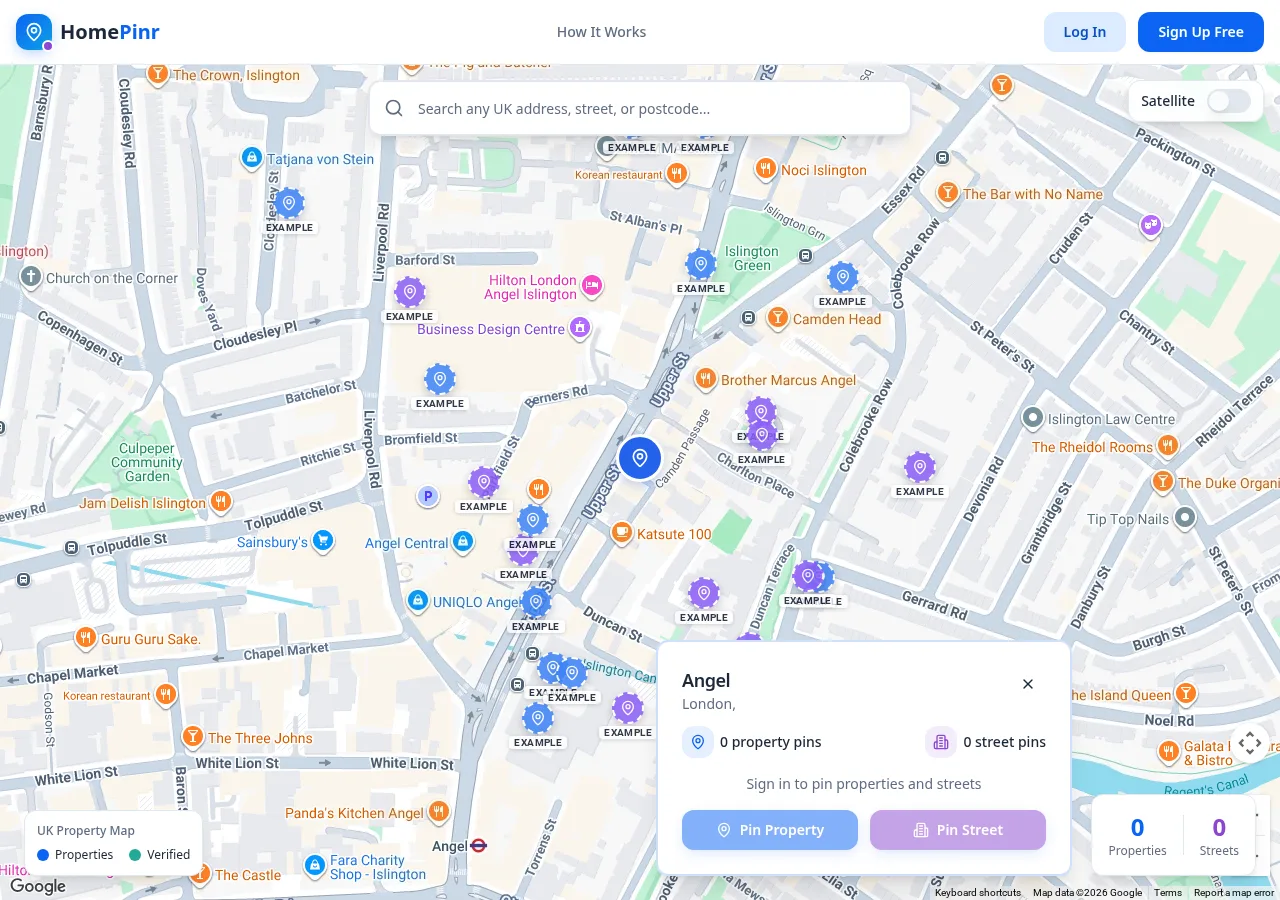
Buying your first home in London
If you’re buying for the first time, you may know roughly where you want to be long before you’re ready to make an offer. While you save or get a mortgage in principle, you can pin the London homes and streets you’d consider and adjust them as your plans firm up. A pin is not an offer and doesn’t commit you to anything.
For London homeowners
If you own a home in London, you can claim it on HomePinr for free to see whether buyers have registered interest in your home or your street. Claiming is a self-declaration — HomePinr doesn’t currently verify ownership independently — and each property can only be claimed once.
Claiming doesn’t mean you’ve decided to sell, and you’re under no obligation to reply to anyone.
How a match works
A match happens when a buyer’s pinned home or street overlaps with a claimed property. It works in either order: the buyer can pin first, or the homeowner can claim first. Both can be notified and can then message through HomePinr, where buyers are shown to homeowners with general labels rather than their names. A match doesn’t guarantee a reply, a viewing, a sale or a purchase.
Using HomePinr alongside Rightmove and Zoopla
Rightmove and Zoopla help buyers search homes currently marketed for sale. HomePinr works alongside them by letting buyers register interest in London homes and streets that aren’t currently listed. It doesn’t replace an estate agent or a property portal.
Outer London and nearby towns
Inside Greater London
- Richmond — in the London Borough of Richmond upon Thames, next to Richmond Park, one of the Royal Parks.
- Croydon — the London Borough of Croydon, in south London, served by the London Trams network.
- Barnet — the London Borough of Barnet, on the northern edge of Greater London.
Outside Greater London
- Epsom — in Surrey, south-west of Greater London.
- Watford — in Hertfordshire, north-west of Greater London.
- Dartford — in Kent, just east of Greater London.
These three towns are not part of London. You can pin homes and streets anywhere in the UK, including there.
London FAQs
Can I pin a London home that isn’t for sale?
Yes. That’s what HomePinr is for. A pin records your interest; it doesn’t mean the home is available.
Do I need to know the borough?
No. Search the exact address or street. It is still worth checking the borough and postcode, because many London street names are repeated.
Are Watford, Epsom and Dartford part of London?
No. They are outside Greater London, in Hertfordshire, Surrey and Kent. You can still pin homes there.
Does a London homeowner have to be planning to sell?
No. Claiming a property just lets you see recorded interest. It isn’t a decision to sell.
Does HomePinr replace Rightmove, Zoopla or an estate agent?
No. HomePinr works alongside them for homes and streets that aren’t currently listed.
More HomePinr city guides
Manchester · Liverpool · Birmingham · Leeds · Cardiff · Glasgow · Edinburgh · Newcastle · Bristol
Across HomePinr
UK-wide figures — not London totals.
Free to use
Signing up, pinning and claiming are currently free.
New to HomePinr? Read What is HomePinr?